Convection and Radiant Stoves
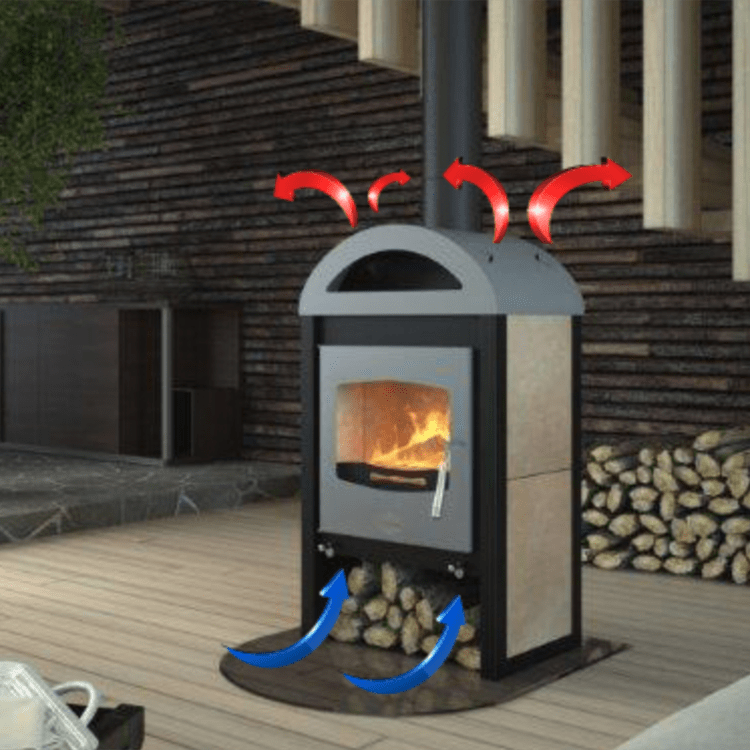
Convection stoves are double-walled units in which cold air is drawn into the space between the combustion chamber casing and the outer shell of the stove at the bottom. As it flows through this gap, it heats up and rises. This creates natural air circulation, enabling the stove to heat larger spaces. The heat distribution is more even and the outer surface temperature of the stove is generally lower than that of radiant stoves. In areas where the stove has no second shell — for example around the
Convection wood-burning stoves
Cold air is drawn in at the bottom, heats up between the stove's shells, and warm air is released at the top.
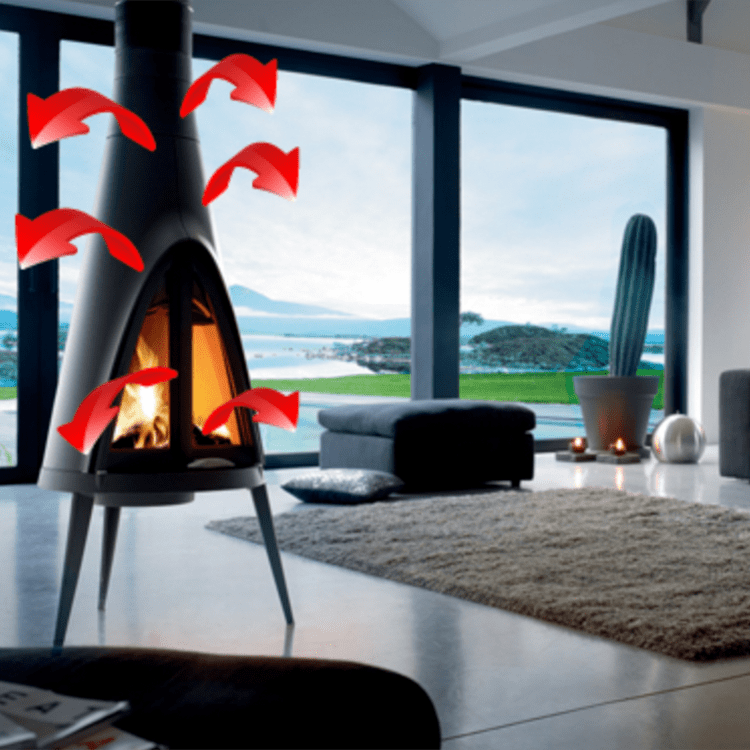
Radiant wood-burning stoves
Heat is "radiated" into the surrounding space, warming everything around the stove.
Radiant wood-burning stoves have no second shell and therefore do not allow air circulation. Radiant heat is transferred from the entire surface of the stove through the space to the surroundings — furniture and other objects — raising their temperature. The stove heats up quickly and its surface reaches higher temperatures than convection stoves. Radiant wood-burning stoves are suited to rooms with high ceilings, and their main advantage is the rapid transfer of heat into the room.